
Mini Split vs Central Air: Which Costs Less to Run?
A head-to-head comparison of mini split and central air operating costs. See real numbers on energy consumption, installation, and long-term savings.
Admin User
Author
Mini Split vs Central Air: Which Costs Less to Run?
When it comes to cooling and heating your home, the two most popular options are central air conditioning and ductless mini splits. Both get the job done — but one costs significantly less to operate over the long run. Let's break down the real numbers.
The Short Answer
Mini splits cost 30-50% less to operate than central air systems. The savings come from higher efficiency ratings, elimination of duct losses, and zone-based control that lets you heat or cool only the rooms you're using.
But the full picture involves installation costs, maintenance, and your specific home layout. Let's dig into each factor.
Energy Efficiency: SEER2 Ratings Compared
The SEER2 (Seasonal Energy Efficiency Ratio 2) rating tells you how efficiently a system converts electricity into cooling. Higher is better.
Typical SEER2 Ratings
| System Type | SEER2 Range | Average |
|---|---|---|
| Budget central air | 13-15 | 14 |
| Mid-range central air | 15-18 | 16 |
| High-end central air | 18-22 | 20 |
| MrCool 5th Gen DIY Mini Split | 20-22+ | 21.5 |
The MrCool 5th Gen systems start where high-end central air maxes out. The 12K BTU bundle delivers a SEER2 rating above 20, outperforming central air systems that cost two to three times as much.
The Hidden Cost: Duct Losses
Here's what many homeowners don't realize: central air systems lose 25-35% of their cooling energy through ductwork. That means even if your central air unit is rated at SEER2 18, the effective efficiency delivered to your rooms is closer to SEER2 12-13 once duct losses are factored in.
Where Duct Energy Goes
- Leaky joints and connections: 15-20% of air escapes through gaps in ductwork
- Thermal transfer: Ducts running through unconditioned attics or crawl spaces lose cooling to the surrounding air
- Friction losses: Air moving through long duct runs loses pressure, requiring the blower to work harder
- Dirty filters and blockages: Restricted airflow forces the system to run longer cycles
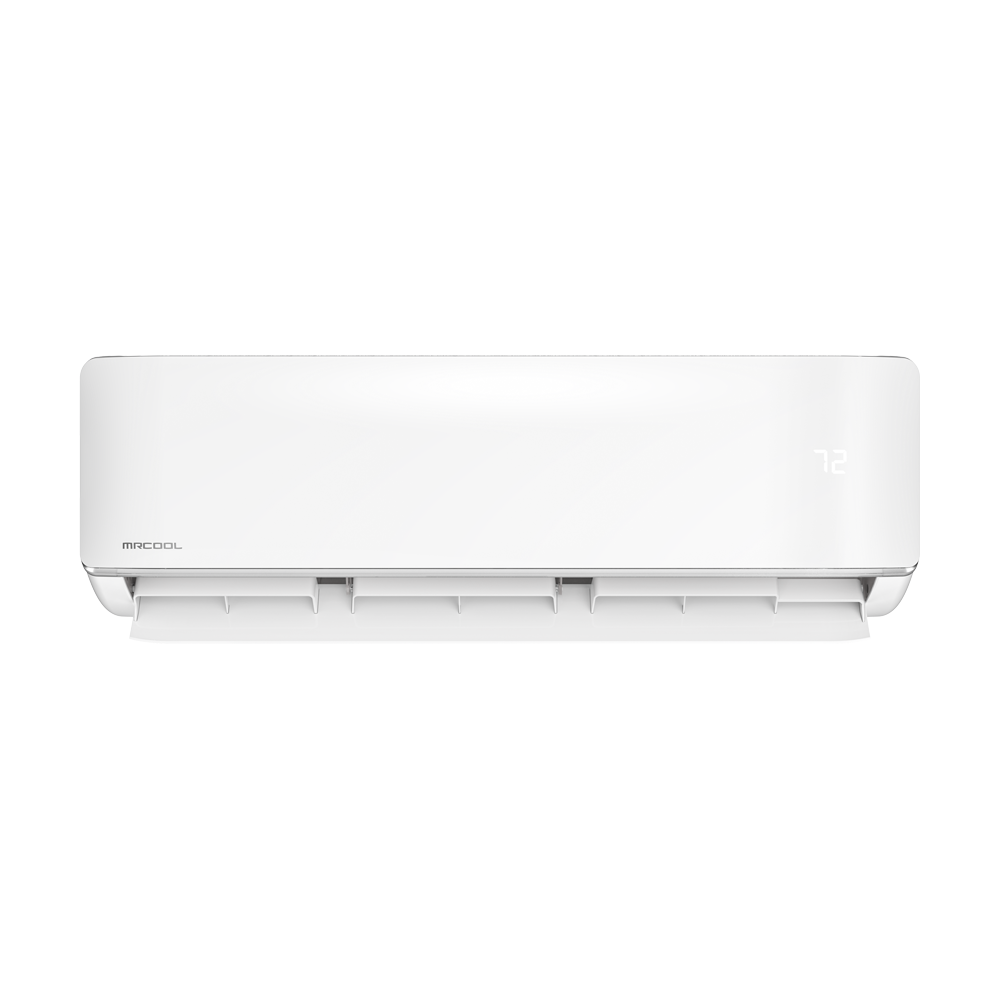
Mini splits eliminate all of these losses because they deliver conditioned air directly to the room through a wall-mounted air handler. No ducts means no duct losses — period.
Monthly Operating Cost Comparison
Let's compare monthly costs for cooling a typical 1,500 sq ft home in a warm climate (assume $0.14/kWh electricity and 1,000 cooling hours per season):
Central Air (SEER2 16, with 30% duct loss)
- Effective SEER2: ~11.2
- BTU needed: 36,000 BTU/hr
- Annual kWh: 36,000 / 11,200 × 1,000 = 3,214 kWh
- Annual cost: 3,214 × $0.14 = $450/year
- Monthly (summer): $112/month
MrCool Mini Split (SEER2 21, no duct loss)
- Effective SEER2: 21 (what you see is what you get)
- BTU needed: 36,000 BTU/hr (using a 36K BTU system)
- Annual kWh: 36,000 / 21,000 × 1,000 = 1,714 kWh
- Annual cost: 1,714 × $0.14 = $240/year
- Monthly (summer): $60/month
Zone Control Savings
The numbers above assume you're cooling the entire home. But mini splits offer zone control — you only cool rooms you're using. Most families spend 80% of their time in 40% of their home. With zone control:
- Realistic mini split annual cost: ~$145/year
- That's 68% less than central air
Installation Cost Comparison
Central Air Installation
| Component | Cost Range |
|---|---|
| Condenser unit | $2,500-$5,000 |
| Air handler/furnace | $1,500-$3,000 |
| Ductwork (new) | $3,000-$7,000 |
| Labor | $2,000-$5,000 |
| Total | $9,000-$20,000 |
MrCool DIY Mini Split Installation
| Component | Cost Range |
|---|---|
| Single-zone 12K BTU bundle | ~$1,200 |
| Two zones (12K + 18K) | ~$2,800 |
| Whole-home multi-zone | ~$4,000-$6,000 |
| DIY labor | $0 (your weekend) |
| Total (whole home) | $4,000-$6,000 |
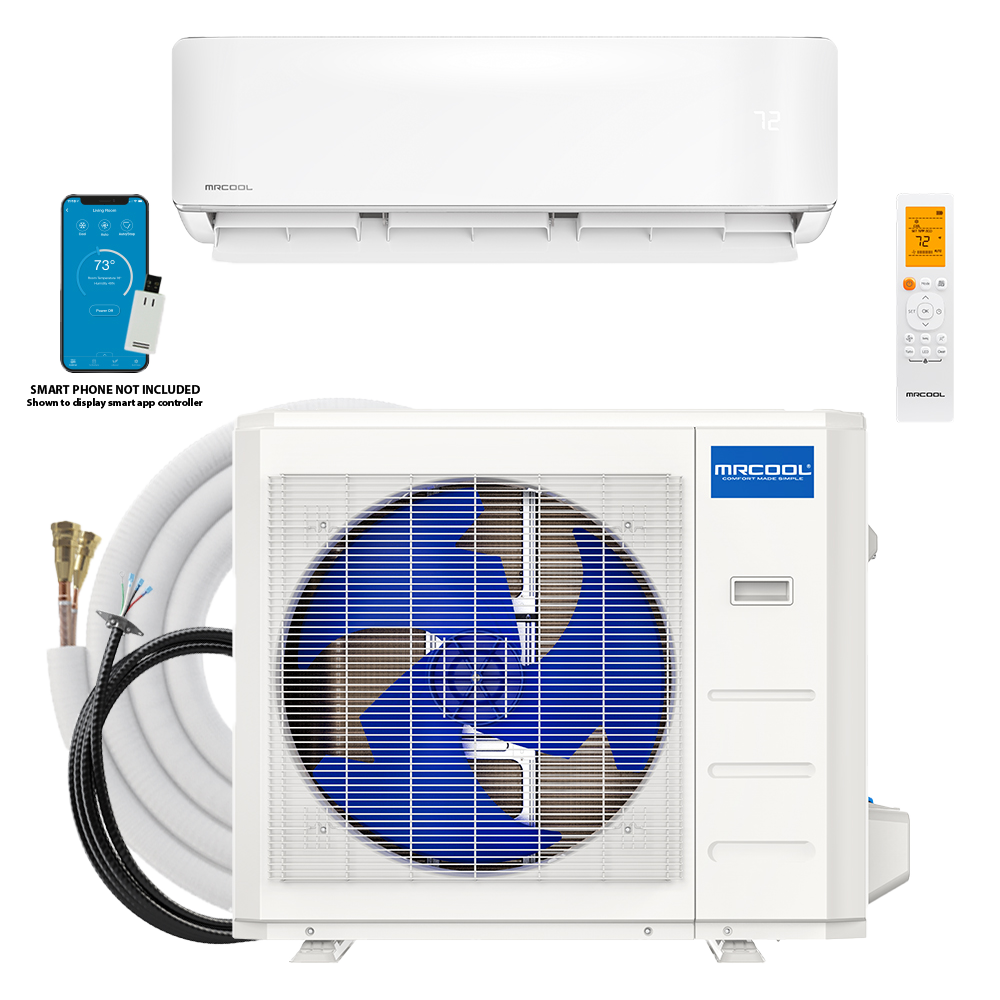
MrCool DIY mini splits are specifically designed for homeowner installation. The pre-charged line sets use quick-connect fittings — no HVAC certification required, no vacuum pump needed, no brazing. Watch Zomg the Handyman walk through the entire install process.
10-Year Total Cost of Ownership
| Factor | Central Air | MrCool Mini Splits |
|---|---|---|
| Installation | $14,000 | $5,000 |
| Annual energy (w/ zones) | $450 | $145 |
| 10-year energy | $4,500 | $1,450 |
| Maintenance (10 yr) | $2,000 | $500 |
| 10-Year Total | $20,500 | $6,950 |
Over 10 years, mini splits save approximately $13,550 compared to central air — and that's before factoring in tax credits and rebates that can further offset the purchase price.
When Central Air Makes More Sense
To be fair, there are scenarios where central air has advantages:
- You already have ductwork in good condition: If your ducts are properly sealed and insulated, the duct loss penalty is smaller
- You want invisible installation: Some homeowners prefer not to have wall-mounted units visible in rooms
- Very large homes (3,000+ sq ft): Cooling many zones with mini splits requires multiple outdoor condensers, which can add up
- Resale considerations in some markets: Some buyers in luxury markets expect central air
But Even Then...
Even with existing ductwork, a mini split for your most-used rooms (living room, master bedroom) as a supplement to central air can cut your bills dramatically. Many homeowners use a hybrid approach: central air for baseline comfort, mini splits for the rooms they use most.
When Mini Splits Are the Clear Winner
- Homes without existing ductwork: Adding ductwork costs $3,000-$7,000+. Mini splits avoid this entirely.
- Room additions and renovations: A single 9K BTU mini split can condition an added room for a fraction of extending ductwork.
- Older homes: Many homes built before 1970 weren't designed for ductwork, and retrofitting is invasive and expensive.
- Garages, workshops, and outbuildings: No ductwork available? No problem.
- Hot/cold spots: Mini splits can solve comfort problems in rooms that central air struggles to reach.
- Energy-conscious homeowners: If minimizing your carbon footprint and energy bills is a priority, mini splits are the clear choice.
Noise Comparison
Modern mini splits are remarkably quiet:
- MrCool 5th Gen indoor unit: 22-35 dB (quieter than a whisper)
- Central air registers: 40-55 dB
- MrCool outdoor condenser: 48-56 dB
- Central air condenser: 55-75 dB
Mini splits win on noise too. The indoor unit is so quiet you'll forget it's running.
The Verdict
For most homeowners, mini splits cost significantly less to run than central air — typically 30-50% less on energy bills, with dramatically lower installation costs for homes without existing ductwork.
The MrCool 5th Gen DIY line makes the value proposition even stronger because you eliminate professional installation labor costs entirely.
Ready to Switch?
Start with a single zone in your most-used room and see the difference on your next energy bill. Use promo code SUMMER100 for $100 off any 5th Gen DIY system.
Share this article
Cut your energy bill for good
High-SEER2 inverter systems use a fraction of the power of what they replace — and may qualify for a 30% federal credit.
More on this topic: Cost & Savings
Keep Reading
Related Articles
How Much Does a Mini Split Cost? 2026 Pricing Guide
Complete 2026 mini split pricing guide covering equipment, installation, and operating costs. Learn what to budget for a MrCool DIY or professionally installed system.
California: Energy-Efficient Cooling
California's diverse climate zones and strict energy codes make mini splits the ideal HVAC solution. From LA heat to SF fog, find the right system for your area.
Florida: MrCool for Humid Climates
Florida's relentless humidity demands HVAC systems built for moisture removal. Learn why mini splits excel in Miami, Tampa, Orlando, and Jacksonville.