
Best Mini Split for Texas Homes
Texas heat is no joke. From Houston humidity to Dallas triple digits, learn which MrCool mini split systems handle Texas summers best.
Admin User
Author
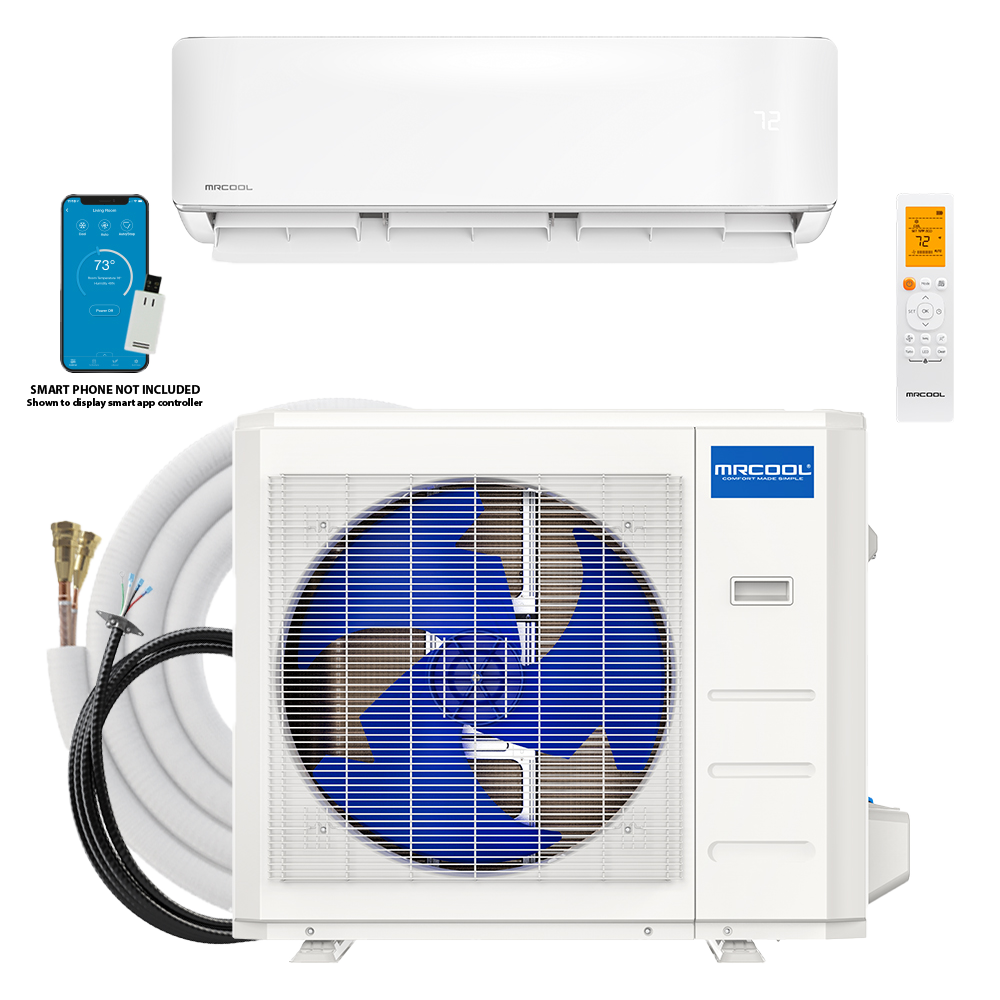
Best Mini Split for Texas Homes
Texas doesn't do anything small — including summer heat. With temperatures routinely exceeding 100°F from June through September and humidity levels along the Gulf Coast that make 95°F feel like 110°F, choosing the right cooling system for a Texas home is critical.
MrCool 5th Gen DIY mini splits are increasingly popular across the Lone Star State because they handle both the brutal heat and the punishing humidity with efficiency that Texas-sized electric bills can appreciate.
Texas Climate Zones: One State, Many Challenges
Texas spans multiple climate zones, each with different HVAC demands:
Houston and the Gulf Coast
Climate profile: Hot, extremely humid. Summer highs of 95-100°F with humidity consistently above 70-80%. Mild winters rarely dropping below 30°F.
HVAC challenge: Humidity is the primary enemy. An undersized system cools the air but can't dehumidify fast enough, leaving homes feeling clammy even at 75°F. Oversized systems are equally problematic — they cool too quickly, short-cycling before removing enough moisture.
Recommended sizing: Go with the standard BTU recommendation or slightly larger. The longer run times of a properly sized system extract more humidity.
- 300 sq ft room: 12K BTU (the 9K can handle it, but the 12K provides better dehumidification at modest cost increase)
- 500 sq ft room: 18K BTU
- 800 sq ft area: 24K BTU
Pro tip for Houston: Use the MrCool's "dry mode" during shoulder seasons (spring and fall) when it's humid but not necessarily hot. This dehumidifies without overcooling.
Dallas-Fort Worth Metroplex
Climate profile: Hot, semi-arid. Summer highs of 95-105°F with moderate humidity. Winters include occasional ice storms and temperatures in the 20s-30s.
HVAC challenge: The Dallas area gets genuinely cold in winter — as the February 2021 ice storm brutally demonstrated. A heat pump that handles both cooling and heating is ideal.
Recommended sizing: Standard BTU recommendations apply. Focus on systems that perform well in heating mode for winter.
Pro tip for DFW: Keep a small backup heat source (electric baseboard or space heater) for the rare ice storms when temperatures drop below 10°F. The heat pump handles 95%+ of heating hours.
San Antonio and Central Texas
Climate profile: Hot, moderate humidity. Summer highs of 95-100°F. Mild winters with rare freezes.
HVAC challenge: Similar to Dallas but with slightly more humidity and milder winters. Standard cooling is the primary need.
Recommended sizing: Standard BTU recommendations.
- Budget option: Start with a 12K BTU in the bedroom, use central air for common areas
- Full solution: 24K BTU for main living space + 12K BTU for master bedroom
Austin
Climate profile: Hot, variable humidity. Summer highs of 95-105°F. Known for rapid weather changes. Growing city with many older homes and new construction.
HVAC challenge: Austin has a large stock of older homes — many built in the 1960s-1980s without great insulation. These homes benefit enormously from mini splits because ductwork in Austin attics (where temperatures can reach 140-160°F) loses massive amounts of energy.
Recommended sizing: Consider sizing up one level for homes with poor insulation or west-facing exposure.
West Texas and the Panhandle
Climate profile: Hot and dry summers, cold winters with wind. Lubbock, Amarillo, Midland-Odessa.
HVAC challenge: The combination of extreme summer heat (100°F+) and genuine winter cold (teens and single digits) makes this a true two-season climate. A heat pump provides efficient year-round comfort.
Recommended: 24K BTU or 36K BTU for main living areas with excellent cold-weather heating performance.
Texas-Specific Installation Considerations
Outdoor Unit Placement
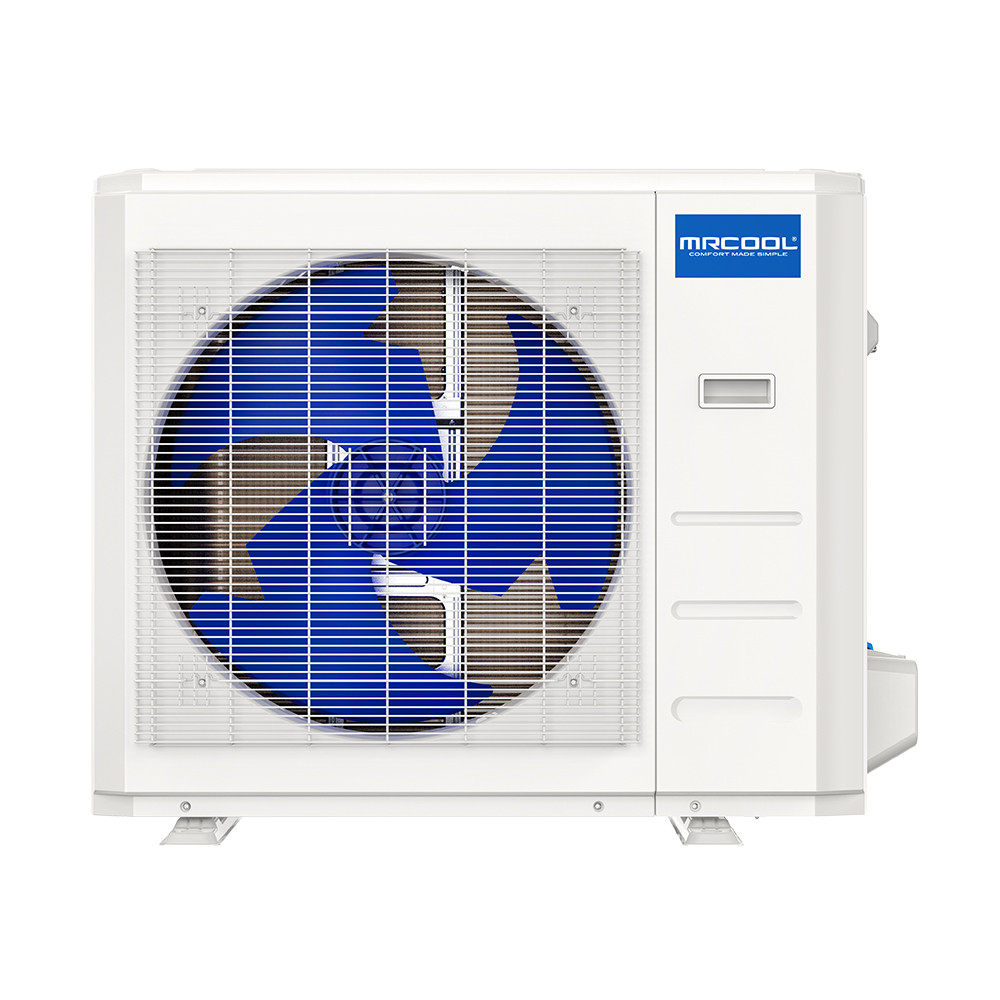
Texas sun is brutal on outdoor equipment. Place your condenser:
- North or east-facing wall to minimize direct afternoon sun exposure
- Under an awning or shade structure if possible — shaded condensers use 5-10% less energy
- Elevated 4-6 inches in Gulf Coast flood-prone areas
- Away from lawn sprinklers that can mineral-deposit on coils
Electrical Considerations
- 9K and 12K systems: Run on 115V — standard Texas household outlets. Most Texas homes have adequate electrical capacity.
- 18K, 24K, and 36K systems: Require 230V dedicated circuit. In newer Texas homes, this is typically easy to add. Older homes may need panel capacity evaluation.
- ERCOT grid concerns: Texas operates its own power grid (ERCOT). A high-efficiency mini split reduces your grid dependence — the MrCool 5th Gen uses 40-60% less electricity than older systems.
Hurricane and Storm Prep (Gulf Coast)
Houston, Galveston, Corpus Christi, and Beaumont area homeowners should:
- Use hurricane straps on the outdoor condenser
- Consider wall-mounting the condenser above flood level
- Install a surge protector (Texas thunderstorms produce significant power surges)
Texas Energy Costs and Savings
Current Texas Electricity Rates
Texas has a deregulated electricity market, meaning rates vary by provider and plan:
- Average residential rate: $0.12-$0.15/kWh
- Summer peak rates (some plans): $0.18-$0.30/kWh
- Fixed-rate plans: $0.10-$0.14/kWh
Monthly Cooling Cost Comparison (Houston, July)
| System | SEER2 | Monthly Cost |
|---|---|---|
| Old central AC (15 yr old) | 10 | $380 |
| New central AC | 14 | $270 |
| MrCool 5th Gen (whole home) | 21 | $180 |
| MrCool 5th Gen (zone control) | 21 | $110 |
Annual savings with zone-controlled mini splits: $1,500-$2,500 vs. older central air in Texas.
Texas Incentives
- Federal 25C tax credit: Up to $2,000 for qualifying heat pump installations
- Austin Energy rebates: Up to $1,400 for heat pump installations
- CPS Energy (San Antonio): Rebates for high-efficiency HVAC upgrades
- Oncor (Dallas area): Various energy efficiency rebates
- Check your provider: Many Texas electricity providers offer additional rebates
Texas Homes and Mini Splits: Common Scenarios
Scenario 1: 1970s Ranch Home with Aging Central Air
These homes are everywhere across Texas — 1,200-1,800 sq ft, single-story, with ductwork in a scorching attic.
Best approach: Install a 24K BTU in the main living area and a 12K BTU in the master bedroom. Set central air to 80°F as backup. Energy bills drop 40-50%.
Scenario 2: New Construction Supplemental
Modern Texas homes often have great central air but one problem room — a home office above the garage, a sun-facing game room, or a detached casita.
Best approach: 9K BTU or 12K BTU for the problem room. DIY install in one afternoon. Problem solved.
Scenario 3: Garage Conversion (Home Gym, Office, Studio)
Texas garages routinely hit 120-130°F in summer. Converting one to usable space requires dedicated cooling.
Best approach: 18K BTU for a two-car garage, 12K BTU for a one-car garage. Add insulation to the garage door and walls for maximum effectiveness.
Scenario 4: Metal Building / Barndominium
The barndominium trend is huge in Texas. These metal buildings heat up fast in sun and cool down fast at night.
Best approach: 36K BTU for the main living area. Add insulation to the metal walls and ceiling — without insulation, any cooling system will struggle.
Beat the Texas Heat
Texas summers are getting hotter and longer. A MrCool 5th Gen DIY mini split gives you efficient, reliable cooling without the sticker shock of central air installation or replacement.
Recommended for Texas Homes
- 9K BTU — Single rooms, offices
- 12K BTU — Bedrooms, studios
- 18K BTU — Large rooms, garages
- 24K BTU — Main living areas
- 36K BTU — Whole-home, barndos
Use promo code SUMMER100 for $100 off at HVACZAR.
Share this article
Find rebates in your state
Federal tax credits plus state and utility rebates can cut thousands off a qualifying heat pump.
More on this topic: Buying Guides
Keep Reading
Related Articles
Las Vegas to Phoenix: Desert City Cooling
The Southwest desert corridor from Las Vegas to Phoenix faces months of 100°F+ heat. Learn how to size, install, and optimize mini splits for desert city living.
Alaska: Hyper Heat for Extreme Cold
Alaska's extreme cold tests the limits of any heating system. Learn how modern cold-climate heat pumps perform in Anchorage, Fairbanks, and Juneau — and when you need backup.
Hawaii: Year-Round Tropical Cooling
Hawaii's tropical climate means year-round cooling and dehumidification needs. Learn which mini splits work best for island homes and how to handle salt air.