
Mountain West: Colorado, Utah, Montana
Mountain West homes face altitude effects, dry cold, and intense sun. Learn how to size and install mini splits for Denver, Salt Lake City, and mountain communities.
Admin User
Author
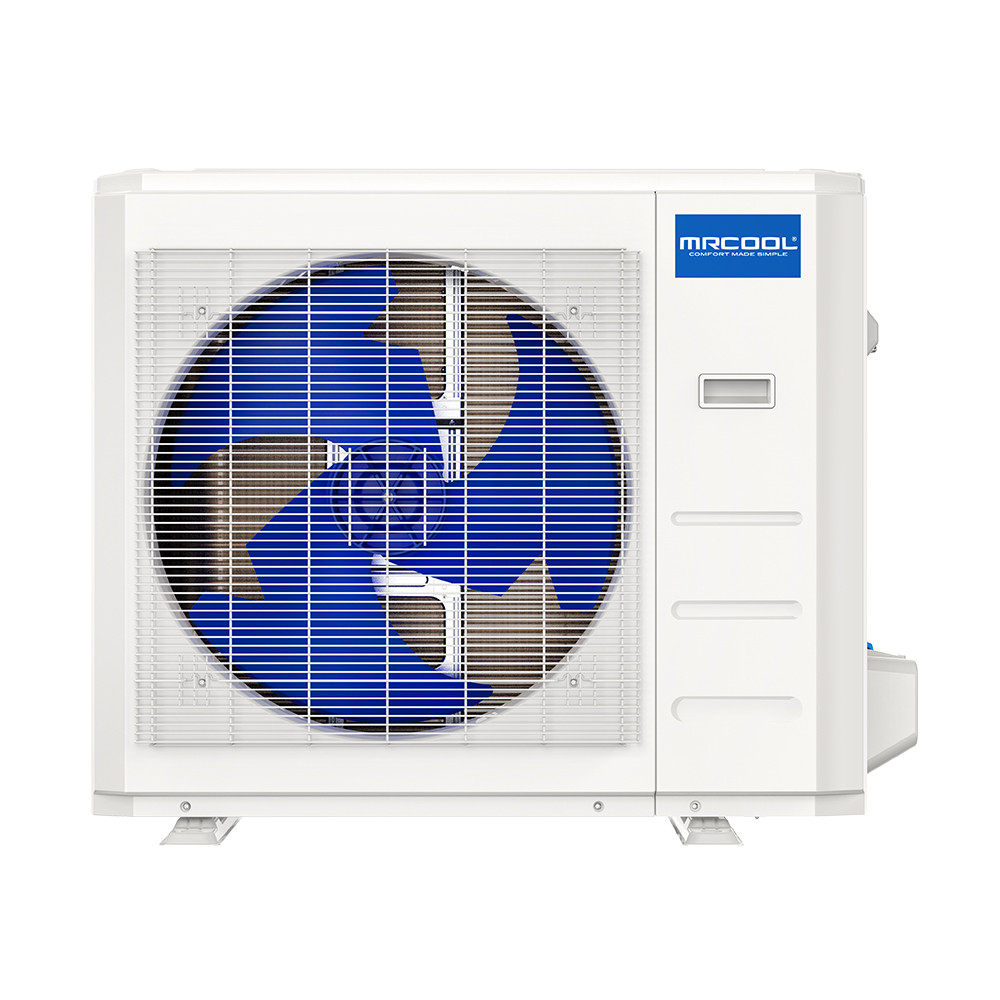
Mountain West: Colorado, Utah, Montana
The Mountain West presents a unique HVAC challenge that doesn't fit neatly into "hot climate" or "cold climate" categories. Denver, Salt Lake City, Boise, and mountain communities throughout Colorado, Utah, Montana, Wyoming, and Idaho experience intense sun, dry cold, rapid temperature swings, and altitude effects that all impact HVAC performance.
Understanding these regional factors is the key to choosing and installing the right mini split system.
Mountain West Climate: Unique Characteristics
Altitude Effects on HVAC
Higher altitude means lower air density, which affects HVAC in ways that coastal homeowners never consider:
| City | Elevation | Air Density vs. Sea Level |
|---|---|---|
| Denver, CO | 5,280 ft | 83% |
| Salt Lake City, UT | 4,226 ft | 86% |
| Boise, ID | 2,730 ft | 91% |
| Albuquerque, NM | 5,312 ft | 83% |
| Cheyenne, WY | 6,062 ft | 80% |
| Mountain towns | 7,000-10,000 ft | 70-77% |
What this means for HVAC:
- Reduced air handler capacity: Less dense air carries less thermal energy per cubic foot, meaning the system moves slightly less heat with the same fan speed
- Enhanced evaporative cooling: The dry air at altitude makes evaporative processes more effective
- Faster heating/cooling losses: Thinner air is a poorer insulator, so homes lose heat faster through air infiltration
Practical impact: In most cases, the altitude effect is small enough (5-15%) that standard sizing still works. For communities above 7,000 feet, consider sizing up one level.
Dry Cold vs. Humid Cold
Mountain West cold is fundamentally different from Midwest or Northeast cold:
- Dry cold: 10°F in Denver (with 25% humidity) feels less brutal than 20°F in Chicago (with 70% humidity)
- Less frost on outdoor coils: Dry air means less defrost cycling, improving heat pump efficiency
- Less condensation issues: Indoor humidity is rarely a problem — sometimes it's too dry
- Better heat pump performance: Heat pumps extract heat more efficiently from dry air than humid air at the same temperature
Intense Solar Gain
The Mountain West gets intense sun due to altitude and clear skies:
- Denver: 300 days of sunshine per year, UV intensity 25% higher than sea level
- Salt Lake City: 222 sunny days with intense summer sun
- Mountain towns: Even higher UV due to altitude
This solar intensity means:
- South and west-facing rooms heat up dramatically in summer
- Solar gain can help offset heating needs in winter (passive solar)
- UV degrades outdoor equipment faster — use UV-rated line set covers
Rapid Temperature Swings
Mountain West temperatures can swing 40-50°F in a single day:
- Denver average October day: High 65°F, Low 35°F (30°F swing)
- Mountain town average March day: High 50°F, Low 10°F (40°F swing)
This rewards heat pump systems that can switch quickly between heating and cooling modes — exactly what mini splits do.
Regional Climate Profiles
Denver and the Front Range (Colorado)
Climate: Semi-arid. Hot, dry summers (88-95°F). Cold, dry winters (average January low 16°F, design temp 1°F). 300+ sunny days.
HVAC needs: Both heating and cooling are important, but heating is the primary load. Dry climate reduces humidity concerns.
Recommended sizing:
- Standard sizing works — Denver's dry cold is easier on heat pumps than the same temperature in humid climates
- Bedrooms: 9K BTU or 12K BTU
- Main living: 18K BTU or 24K BTU
Salt Lake City and the Wasatch Front (Utah)
Climate: Semi-arid with inversions. Hot, dry summers (90-100°F). Cold winters with valley inversions trapping cold air (average January low 22°F, design temp 5°F). Significant snowfall.
HVAC needs: Strong cooling for summer, reliable heating for winter. Valley inversions can keep temperatures below freezing for weeks.
Recommended sizing:
- Similar to Denver — standard to one-size-up for heating capacity
- Main living: 24K BTU
- Bedrooms: 12K BTU
Mountain Communities (7,000-10,000+ ft)
Climate: Alpine. Short, mild summers (70-85°F). Long, cold winters (design temps from -10°F to -30°F). Heavy snowfall.
HVAC needs: Heating-dominant. Cooling may only be needed for a few weeks in summer.
Recommended sizing:
- Size up one to two levels for extreme cold
- Consider supplemental heat (wood stove or gas fireplace) for the coldest periods
- The 24K BTU and 36K BTU provide the capacity needed for mountain homes
Boise, Idaho
Climate: Semi-arid. Hot, dry summers (95-100°F). Moderate winters (average January low 23°F, design temp 4°F).
HVAC needs: Balanced heating and cooling. Standard sizing works well for Boise's climate.
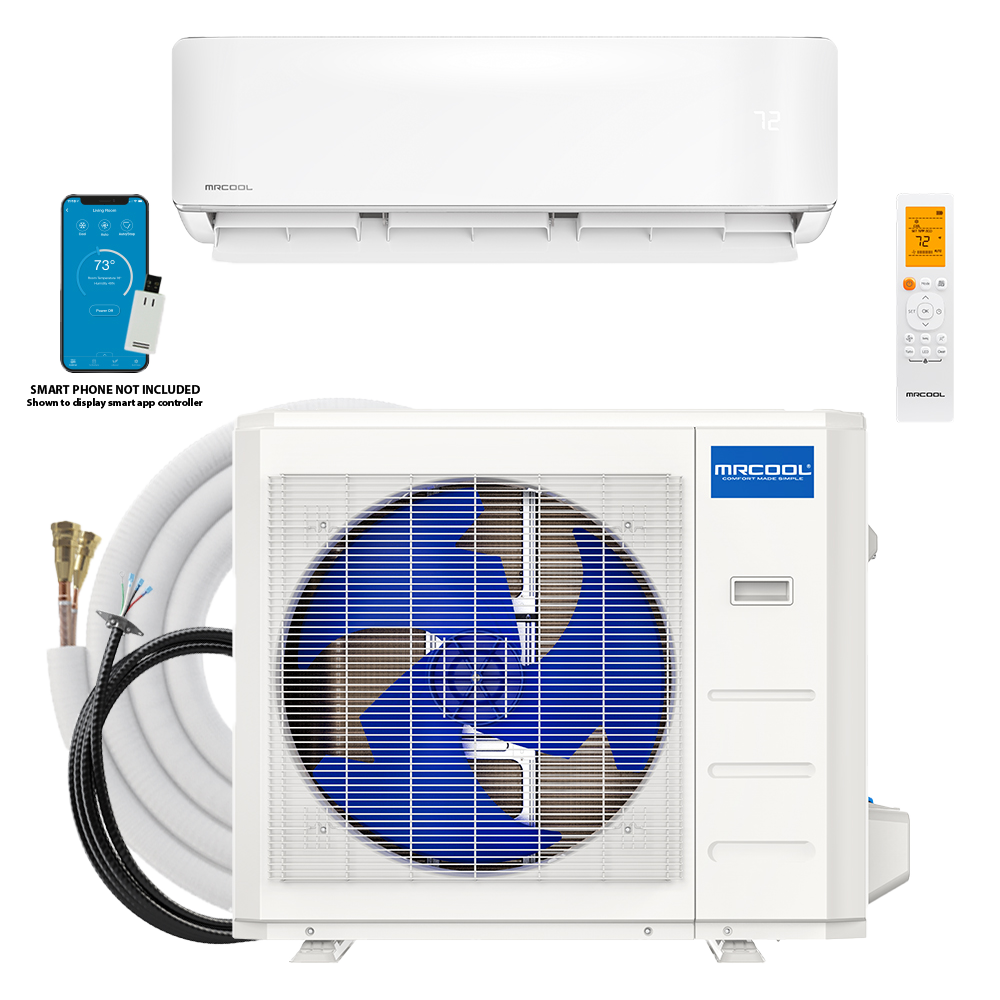
Mountain West Installation Tips
Snow Management
Mountain communities get significant snowfall. Protect your outdoor unit:
- Wall-mount the condenser to keep it above snow accumulation
- Minimum 24 inches above typical snow depth for ground-mounted units
- Install a snow shelf to prevent drift accumulation on top
- Clear snow from around the unit after storms — the unit needs airflow
- Avoid placement under roof drip lines where ice can fall on the unit
UV Protection
High-altitude UV degrades materials faster:
- Use UV-resistant line set covers — standard foam insulation breaks down quickly at altitude
- Inspect line set insulation annually for UV damage
- Paint or seal any exposed mounting hardware to prevent UV degradation
- Consider a UV-resistant condenser cover for summer months when the unit sits idle (only if you're not using cooling)
Altitude-Related Electrical Considerations
Lower air density at altitude slightly affects electrical equipment cooling:
- Ensure adequate ventilation around indoor and outdoor unit electrical components
- Monitor for overheating during the first summer of operation — rare but possible above 8,000 ft
Energy Costs and Savings
Mountain West Electricity Rates
| Utility | Rate |
|---|---|
| Xcel Energy (Denver) | $0.12-$0.15/kWh |
| Rocky Mountain Power (SLC) | $0.10-$0.12/kWh |
| Idaho Power (Boise) | $0.08-$0.10/kWh |
| NorthWestern Energy (Montana) | $0.11-$0.14/kWh |
Annual Savings vs. Gas Furnace + Central AC
| City | Gas + AC Annual Cost | Heat Pump Annual Cost | Savings |
|---|---|---|---|
| Denver | $1,500 | $950 | $550 |
| Salt Lake City | $1,400 | $900 | $500 |
| Boise | $1,200 | $700 | $500 |
| Mountain town | $2,200 | $1,400 | $800 |
Mountain West Incentives
- Federal 25C tax credit: Up to $2,000
- Xcel Energy (CO): Heat pump rebates
- Colorado Energy Office: Additional state incentives
- Rocky Mountain Power (UT): Wattsmart rebates
- Idaho Power: Heat pump incentives
- HVACZAR promo: Code SUMMER100 for $100 off
Common Mountain West Scenarios
Denver Ranch Home
Classic 1960s-1980s Denver ranch: 1,200-1,600 sq ft, aging gas furnace, no AC or window units for summer. A mini split system provides both heating and first-time AC. 24K BTU for the main living area plus 12K BTU for the master bedroom.
Mountain Cabin
Seasonal or year-round mountain cabins benefit from a mini split's WiFi control — pre-heat the cabin from your phone before arriving, set back to minimum when away. The 12K BTU or 18K BTU handles most cabin sizes.
ADU/Mother-in-Law Suite
The Mountain West is seeing rapid ADU construction. A 9K BTU or 12K BTU provides independent climate control for the ADU without tapping into the main home's HVAC.
Garage Workshop
Mountain West garages serve as year-round workshops. A 18K BTU mini split with insulation upgrades makes the space usable even when it's 10°F outside.
Mountain-Ready HVAC
The Mountain West's unique combination of altitude, dry cold, intense sun, and rapid temperature swings requires systems built for versatility. MrCool 5th Gen DIY mini splits handle the full range with year-round efficiency.
Use promo code SUMMER100 for $100 off at HVACZAR.
Share this article
Find rebates in your state
Federal tax credits plus state and utility rebates can cut thousands off a qualifying heat pump.
More on this topic: Cold Climate & Heat Pumps
Keep Reading
Related Articles
Las Vegas to Phoenix: Desert City Cooling
The Southwest desert corridor from Las Vegas to Phoenix faces months of 100°F+ heat. Learn how to size, install, and optimize mini splits for desert city living.
Alaska: Hyper Heat for Extreme Cold
Alaska's extreme cold tests the limits of any heating system. Learn how modern cold-climate heat pumps perform in Anchorage, Fairbanks, and Juneau — and when you need backup.
Hawaii: Year-Round Tropical Cooling
Hawaii's tropical climate means year-round cooling and dehumidification needs. Learn which mini splits work best for island homes and how to handle salt air.