
Winter Heat Pump Guide: Sub-Zero Performance
Can heat pumps really work in sub-zero temperatures? Yes. This guide covers cold-climate heat pump technology, real-world performance data, and the best systems for harsh winters.
Admin User
Author
Winter Heat Pump Guide: Sub-Zero Performance
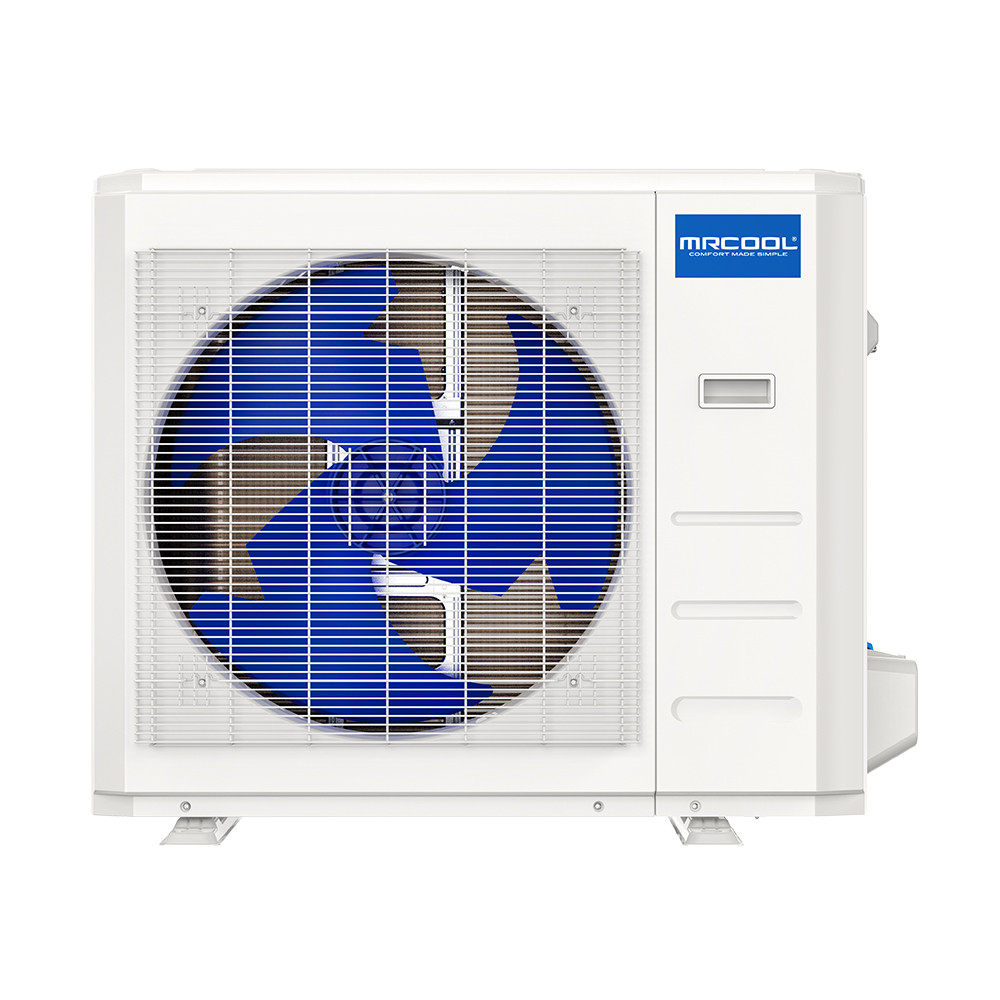
The old knock on heat pumps — "they don't work when it's really cold" — hasn't been true for over a decade. Modern cold-climate heat pumps, including MrCool's 5th Generation DIY line, are engineered to extract heat from outdoor air at temperatures as low as -22°F (-30°C).
This guide covers the technology, real-world performance, and practical strategies for heating with a heat pump in the coldest climates in North America.
The Technology: How Cold-Climate Heat Pumps Work
Standard vs. Cold-Climate Heat Pumps
All heat pumps work by extracting heat from outdoor air. The difference between standard and cold-climate models comes down to three engineering improvements:
1. Enhanced Vapor Injection (EVI) Compressors
Cold-climate heat pumps use vapor injection scroll compressors that inject refrigerant vapor into the compression process at an intermediate pressure. This:
- Increases heating capacity at low temperatures
- Maintains high efficiency when standard compressors would struggle
- Allows the system to produce adequate heat output even at -15°F to -22°F
2. Optimized Refrigerant Circuits
The refrigerant circuit in cold-climate heat pumps is designed with:
- Larger outdoor coils for better heat absorption
- Flash tanks or economizer circuits that boost low-temperature performance
- Advanced expansion valve control that adapts to changing conditions
3. Intelligent Defrost Systems
In cold conditions, frost builds on the outdoor coil more frequently. Cold-climate systems use demand-based defrost (defrosting only when needed based on sensor data) rather than time-based defrost (defrosting every X minutes regardless of conditions). This reduces the heating output penalty of defrost cycles.
MrCool 5th Gen Cold-Climate Features
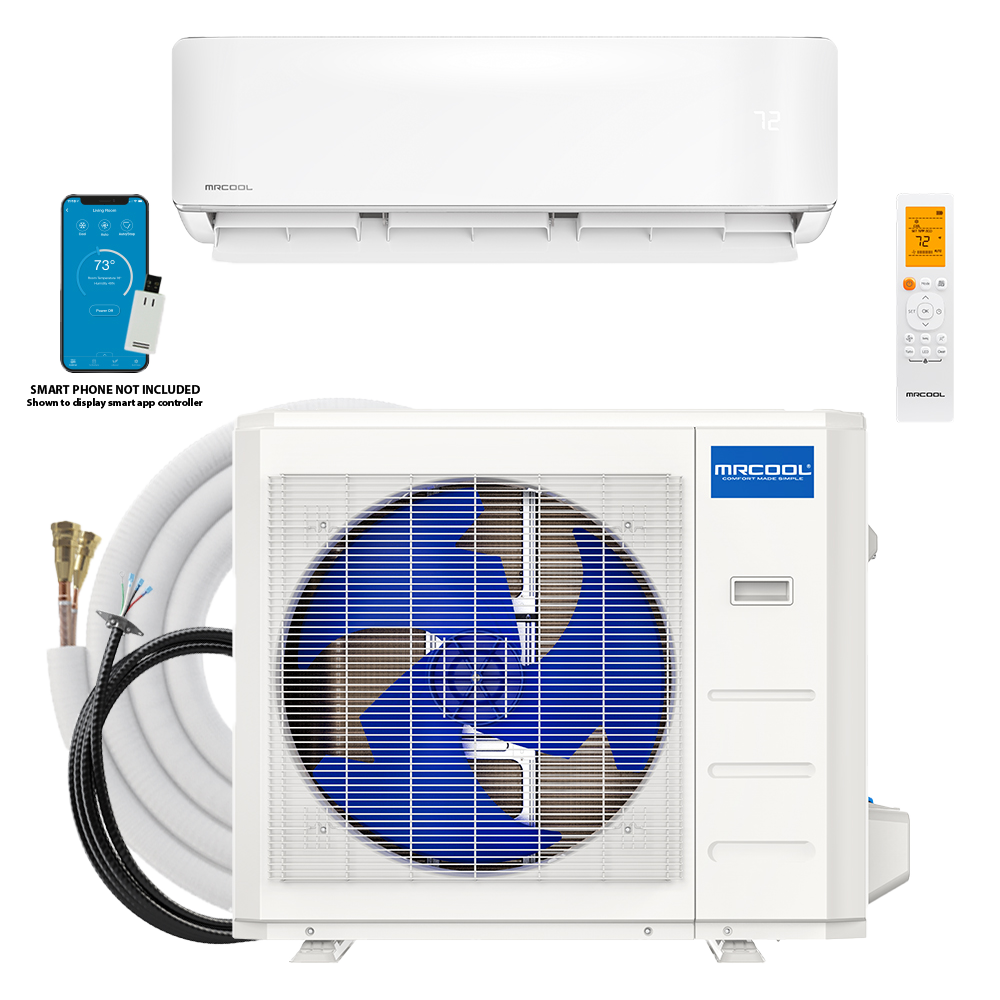
MrCool's 5th Gen DIY line includes several cold-climate technologies:
- Operating range: Heating down to -22°F (-30°C)
- HSPF2 ratings above 10: Industry-leading heating efficiency
- Variable-speed inverter compressor: Adjusts output precisely to match the current heating demand
- Base pan heater: Prevents condensate from freezing in the outdoor unit's base pan
- Auto-restart after power outage: The system automatically resumes operation after a power interruption — critical in winter
Real-World Performance Data
COP (Coefficient of Performance) at Various Temperatures
The COP measures how many units of heat the system produces per unit of electricity consumed. A COP of 3.0 means the system produces 3 units of heat for every 1 unit of electricity — 300% efficiency.
| Outdoor Temperature | Standard Heat Pump COP | MrCool 5th Gen COP |
|---|---|---|
| 47°F (mild) | 3.5-4.0 | 4.0-4.5 |
| 35°F | 2.8-3.2 | 3.2-3.8 |
| 17°F | 2.0-2.5 | 2.5-3.0 |
| 5°F | 1.5-1.8 | 2.0-2.5 |
| -5°F | System shuts down | 1.5-2.0 |
| -13°F | System shuts down | 1.3-1.7 |
| -22°F | System shuts down | 1.0-1.3 |
Even at -22°F, the MrCool 5th Gen produces heat at or above 100% efficiency — meaning it's at least as efficient as electric resistance heat and producing useful heat output.
Heating Capacity Retention
A critical metric for cold-climate heat pumps is how much heating capacity they retain as temperatures drop. A system rated at 24,000 BTU at 47°F might only produce 12,000 BTU at 5°F — a 50% capacity loss.
MrCool 5th Gen systems retain approximately:
- 85-90% capacity at 17°F
- 70-80% capacity at 5°F
- 55-65% capacity at -13°F
- 40-50% capacity at -22°F
This capacity retention is why sizing for cold climates differs from moderate climates.
Sizing for Cold Climates
The Cold Climate Sizing Rule
In moderate climates, you size a heat pump based on the cooling load (since cooling is typically the design condition). In cold climates, you size based on the heating load at the design temperature — the coldest temperature your area typically experiences.
Design Temperatures by Region
| City | Design Temperature | Heating Degree Days |
|---|---|---|
| Minneapolis, MN | -12°F | 7,876 |
| Chicago, IL | -3°F | 6,536 |
| Boston, MA | 6°F | 5,641 |
| Denver, CO | 1°F | 6,128 |
| Anchorage, AK | -18°F | 10,570 |
| Fargo, ND | -18°F | 9,226 |
| Burlington, VT | -7°F | 7,771 |
| Portland, ME | -1°F | 7,511 |
| Billings, MT | -10°F | 7,049 |
Recommended Sizing by Region
| Climate Zone | Design Temp | Room Size | Recommended System |
|---|---|---|---|
| Cold (0 to 10°F) | 5°F | 300 sq ft | 12K BTU |
| Cold (0 to 10°F) | 5°F | 500 sq ft | 18K BTU |
| Cold (0 to 10°F) | 5°F | 800 sq ft | 24K BTU |
| Very Cold (-10 to 0°F) | -5°F | 300 sq ft | 18K BTU |
| Very Cold (-10 to 0°F) | -5°F | 500 sq ft | 24K BTU |
| Very Cold (-10 to 0°F) | -5°F | 800 sq ft | 36K BTU |
| Extreme (-20°F+) | -15°F | Any | Consult sizing professional |
Key point: In very cold climates, size up one system from what you'd choose in a moderate climate. The extra capacity ensures adequate heating when the system's output is reduced by extreme cold.
Supplemental Heat Strategies
The Balance Point
Every heat pump installation has a balance point — the outdoor temperature at which the heat pump's output exactly matches the home's heat loss. Below the balance point, the heat pump can't keep up on its own and supplemental heat is needed.
For well-insulated homes with properly sized MrCool 5th Gen systems, the balance point is typically around 0°F to -10°F. Above that temperature, the heat pump handles 100% of the heating load.
How Much Supplemental Heat Do You Really Need?
Looking at temperature data for cold cities:
| City | Hours Below 0°F Per Year | % of Winter Hours |
|---|---|---|
| Minneapolis | 250-350 | 6-8% |
| Chicago | 80-150 | 2-4% |
| Boston | 30-60 | 1-2% |
| Denver | 60-100 | 2-3% |
| Portland, ME | 100-180 | 3-5% |
| Fargo | 400-550 | 10-13% |
For most cold-climate cities, supplemental heat is needed for less than 5-8% of winter hours. The heat pump handles the other 92-95%.
Best Supplemental Heat Options
Option 1: Electric resistance backup (simplest)
- Small electric baseboard heater in each zone
- Only runs during extreme cold
- Low installation cost ($100-$300 per room)
- Higher operating cost, but only runs 2-8% of winter hours
Option 2: Existing furnace (most common)
- Keep your existing gas or oil furnace as backup
- Set furnace to activate at your balance point temperature
- Heat pump handles 90-95% of heating hours
- Furnace handles the 5-10% extreme cold hours
- Gradually phase out the furnace as heat pump technology continues to improve
Option 3: Wood or pellet stove
- Popular in rural cold-climate areas
- Provides backup heat during power outages (a significant advantage)
- Supplements heat pump during extreme cold
- Creates a cozy atmosphere as a bonus
Option 4: Propane or kerosene space heater
- Emergency backup only
- Good for the 1-2 truly extreme days per year
- Store safely with proper ventilation
Installation Considerations for Cold Climates
Outdoor Unit Placement
- Elevate above snowline: Mount on a wall bracket or elevated platform. The unit should be at least 4-6 inches above typical snow accumulation.
- Protect from wind: North and northwest walls get the coldest wind in most cold-climate locations. Choose a south or east-facing wall if possible.
- Snow management: Install a snow shelf or small roof overhang above the unit to prevent snow from piling on top. Leave the sides open for airflow.
- Drainage: Ensure the defrost condensate can drain away from the unit. In freezing conditions, a small ice buildup under the unit is normal, but large ice dams should be addressed.
Cold-Climate Indoor Unit Considerations
- Mount on interior walls when possible: This keeps the air handler warmer and reduces any cold-wall effect on the line set penetration.
- Use the "heat" mode vertical vane setting: In heating mode, set the horizontal vanes to point downward to push warm air toward the floor. Warm air naturally rises, so directing it downward improves comfort at sitting and standing height.
- Supplement with a ceiling fan on reverse: Running a ceiling fan clockwise on low pushes warm air from the ceiling back down.
Line Set Protection
In extreme cold, the refrigerant line set between indoor and outdoor units needs:
- Intact insulation: Check that the foam insulation on both lines is complete and undamaged. Cold temperatures increase heat loss through uninsulated sections.
- UV protection: Sun exposure degrades foam insulation. Use UV-resistant tape or line set covers.
- Secure mounting: Ensure the line set doesn't sag or contact sharp edges. Thermal cycling (expansion/contraction from temperature changes) can cause movement over time.
Cost Comparison: Heat Pump vs. Traditional Heating
Annual Heating Costs for a 1,500 sq ft Home in Minneapolis
| Heating System | Annual Cost | 10-Year Cost |
|---|---|---|
| Electric baseboard | $3,500 | $35,000 |
| Propane furnace | $2,400 | $24,000 |
| Oil furnace | $2,200 | $22,000 |
| Gas furnace (80% AFUE) | $1,300 | $13,000 |
| Gas furnace (96% AFUE) | $1,100 | $11,000 |
| MrCool heat pump + electric backup | $1,050 | $10,500 |
| MrCool heat pump + gas furnace backup | $950 | $9,500 |
The heat pump wins or ties against every option — even in Minneapolis, one of the coldest major cities in America.
Including Installation Costs (10-Year TCO)
| System | Install Cost | 10-Yr Energy | 10-Yr TCO |
|---|---|---|---|
| Gas furnace (96% AFUE) | $5,000 | $11,000 | $16,000 |
| MrCool DIY heat pump | $3,000 | $10,500 | $13,500 |
| MrCool + gas backup | $3,000* | $9,500 | $12,500* |
*Assumes existing gas furnace kept as backup — no new installation cost.
Making It Work: A Cold-Climate Homeowner's Action Plan
Step 1: Right-Size Your System
Use the cold-climate sizing table above, or consult with HVACZAR for personalized sizing.
Step 2: Plan Your Supplemental Heat Strategy
Decide on your backup heating approach for extreme cold days. Most homeowners keep their existing furnace as backup.
Step 3: Install Before Winter
Fall installation means you're ready when cold weather hits. Order your system in September-October for the best pricing and installation weather.
Step 4: Optimize Settings
- Set the heat pump as the primary heat source
- Set the backup to kick in only below your balance point (-5°F to 5°F for most homes)
- Use the MrCool app to schedule setbacks at night and when away
Step 5: Monitor and Adjust
Track your energy bills through the first winter. Most homeowners find their bills drop 20-40% compared to furnace-only heating.
Systems Built for Winter
MrCool's 5th Gen DIY line isn't a fair-weather system. It's engineered for the coldest conditions with EVI compressors, intelligent defrost, and operating capability down to -22°F.
- 12K BTU — Cold climate bedrooms
- 18K BTU — Cold climate living rooms
- 24K BTU — Very cold climate primary heat
- 36K BTU — Extreme climate whole-home
Use promo code SUMMER100 for $100 off at HVACZAR.
Share this article
Get ahead of the season
Systems ship in 1–3 days — beat the rush before the weather turns.
More on this topic: Cold Climate & Heat Pumps
Keep Reading
Related Articles
Garage Mini Split Install: Heat and Cool Your Workshop
Turn your garage or workshop into a year-round usable space with a MrCool DIY mini split. Sizing, insulation tips, placement, and a full install walkthrough.
Alaska: Hyper Heat for Extreme Cold
Alaska's extreme cold tests the limits of any heating system. Learn how modern cold-climate heat pumps perform in Anchorage, Fairbanks, and Juneau — and when you need backup.
Midwest: Chicago, Detroit, Minneapolis
The Midwest demands HVAC that handles -20°F winters and 95°F summers. Learn how cold-climate heat pumps are conquering the most extreme temperature swings in America.